Odd lots of desert between the high-rises

31 Jan

Forget the malls and hotels; I wanted to get a sense of the texture of the city. I walked for miles as evening fell, and I’m here to say it’s a big quilt. There is very little urban planning here, beyond some main avenues.

That explains why there are no addresses. Mine literally is “PO BOX 129188, Behind ADIAA Tower, across Al Nasr street from the Cultural Foundation.” (Send me a postcard!)  Apart from the main avenues there are just warrens of unplanned, unnamed streets. When you get into a cab you don’t give an address, and you don’t even give a corner. You give a landmark:  a hotel, a mall, a hospital (there are a lot of hospitals here). The unnamed streets can hardly be called streets. Any given stretch of road goes about two blocks, and then you hit a little parking lot or something. Sidewalks are optional. Basically, streets are built around buildings that developers managed to build on this or that lot, not the other way around. The place is worse for pedestrians than Los Angeles.

A patchwork produces a lot of odd lots, irregular geometries left on the ground between buildings. Who owns them? Maybe no one. Many of them are patches of sandy ground, interstitial bits of the desert that once was all there was here.

In fact, these odd lots exist in other places. Gordon Matta Clark did a project where he bought a number of the ones in New York. They tended to be oblong in the extreme. The longest one was 355 feet, but it was only 2 feet 4 inches wide.  The widest one was a little over 6 feet.

Cabinet magazine, as you’d expect, did a beautiful project on them, described here. And the book is here.

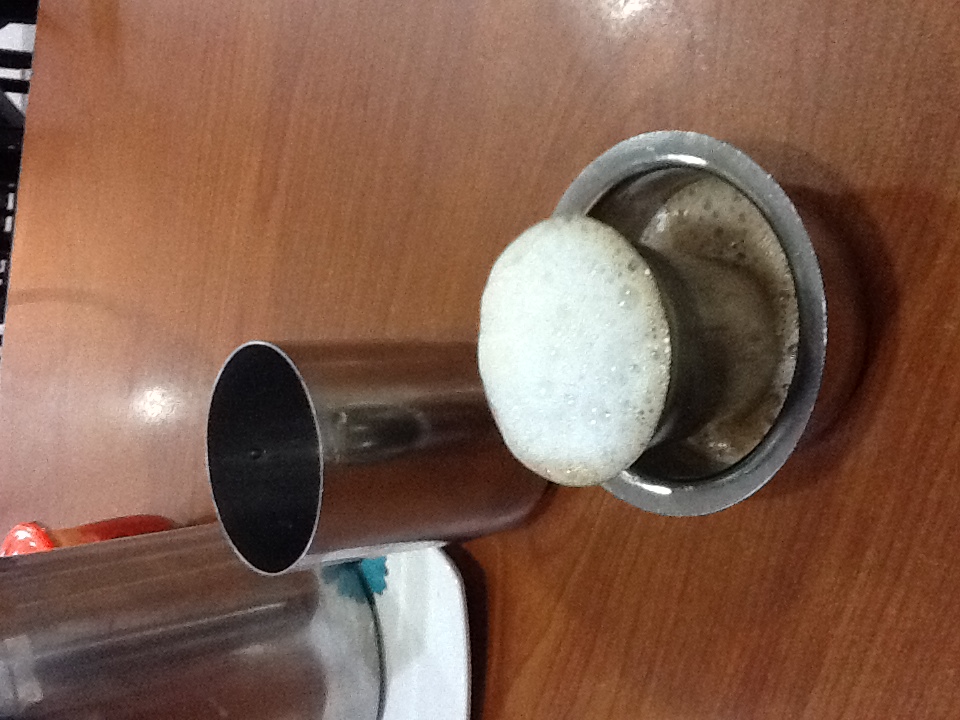
Anyway, I made it home (no map, and then I saw my golfball on the horizon!) and my prize to myself was dinner at my local Indian restaurant. Now isn’t that the most festive cup of chai you ever saw?
Guess I’ll never be a mall rat.

31 Jan

I went yesterday to what I had heard was the mother of all malls here.  I knew that one mall (in a neighboring principality) has a ski slope in it, so I didn’t really know what to expect.  I’m a New Yorker, I don’t know about mall culture.  I grew up in the suburbs, and back then we did our mischief outdoors, in the vicinity of strip malls.  The whole indoor, worlds-within-worlds concept of the mall was something I first encountered in the early 1990s, and I have to admit, it blew my mind.  I thought, this is huge!  We need to understand what this means!  And then a moment later I realized that’s why everyone was all excited about Jean Baudrillard and Fredric Jameson. We were hard at work understanding what it meant.

Anyway, I didn’t know what to expect here, but I was ready for, well, for something on a whole other level. I’m afraid it was just a straightforward, not very big mall. It didn’t even have a lot of insanely expensive stores, the one thing I was counting on in a country enjoying the world’s highest per capita income, or close to it. It was Desigual and Massimo Dutti and Florsheim (!), not to mention Cinnabon and Starbucks. I have to admit, I was disappointed. I know there is very little in the way of cultural events here, but I needed the place to deliver on unreal luxury and spectacle. But in a way it was encouraging because it suggested that this place really does have a middle class. Pretty much all I’d seen so far was rituals of masters and servants. (I’ve participated in a few, inevitably as master. More on that later, when I gather the courage.)

A few days earlier I had gone to another mall, much smaller, called the Central Market. It had the advantage of being the only building–and I mean the only building–of any architectural interest I have seen here so far. I bought some exquisite cedar honey from Yemen there and I am not saying how much I spent on it.  Here’s the building.  Don’t knock it–it’s radical here not to build high.

I always think of this song when I travel. Even if it’s not Cleveland on my mind.

28 Jan

http://www.youtube.com/watch?v=ZUASUTR8Nv0

Excuse me while I have a moment of appreciation for the Persian Gulf

28 Jan

I took my first proper walk along the shore today. I realized this was a whole new body of water for me:  the Persian Gulf and the Indian Ocean. I’ve been to Rajasthan (the picture in the background was photographed there) but I never got to the Indian Ocean. So this felt momentous. The Gulf!  The portal from Palestine, Syria and Mesopotamia to Asia. Which means it is the portal that connects Europe to Asia.

In the Middle Ages, there were three ways for people and goods to travel from West to East and back:  the north route through what we call Central Asia (the Silk Road), the southern passage through Egypt (the Red Sea, but no Suez Canal), and the middle passage through Arabia (the Gulf).  This was the major passage.  When the others didn’t work you defaulted to this one.  When the Portuguese wanted to secure their world dominance in the early 16th century, they made sure to control this passage. And today it is the one route that remains critical to the global economic system, as we we all saw with the panic induced by Iranian threats to close the Strait of Hormuz.

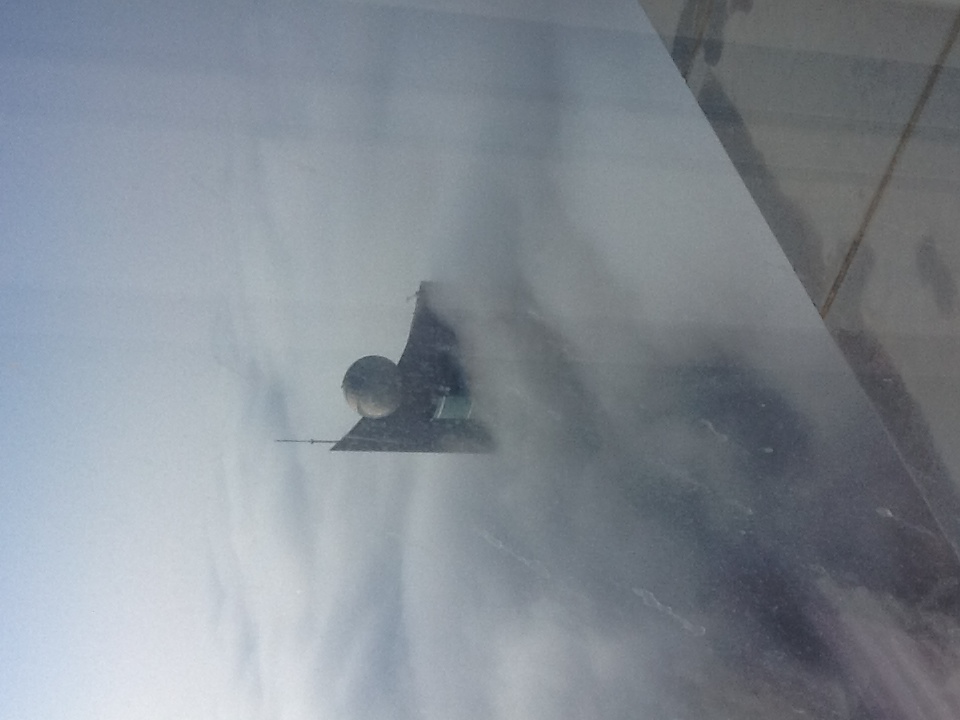
Golfballs in the clouds.

28 Jan

Not taken from a plane.

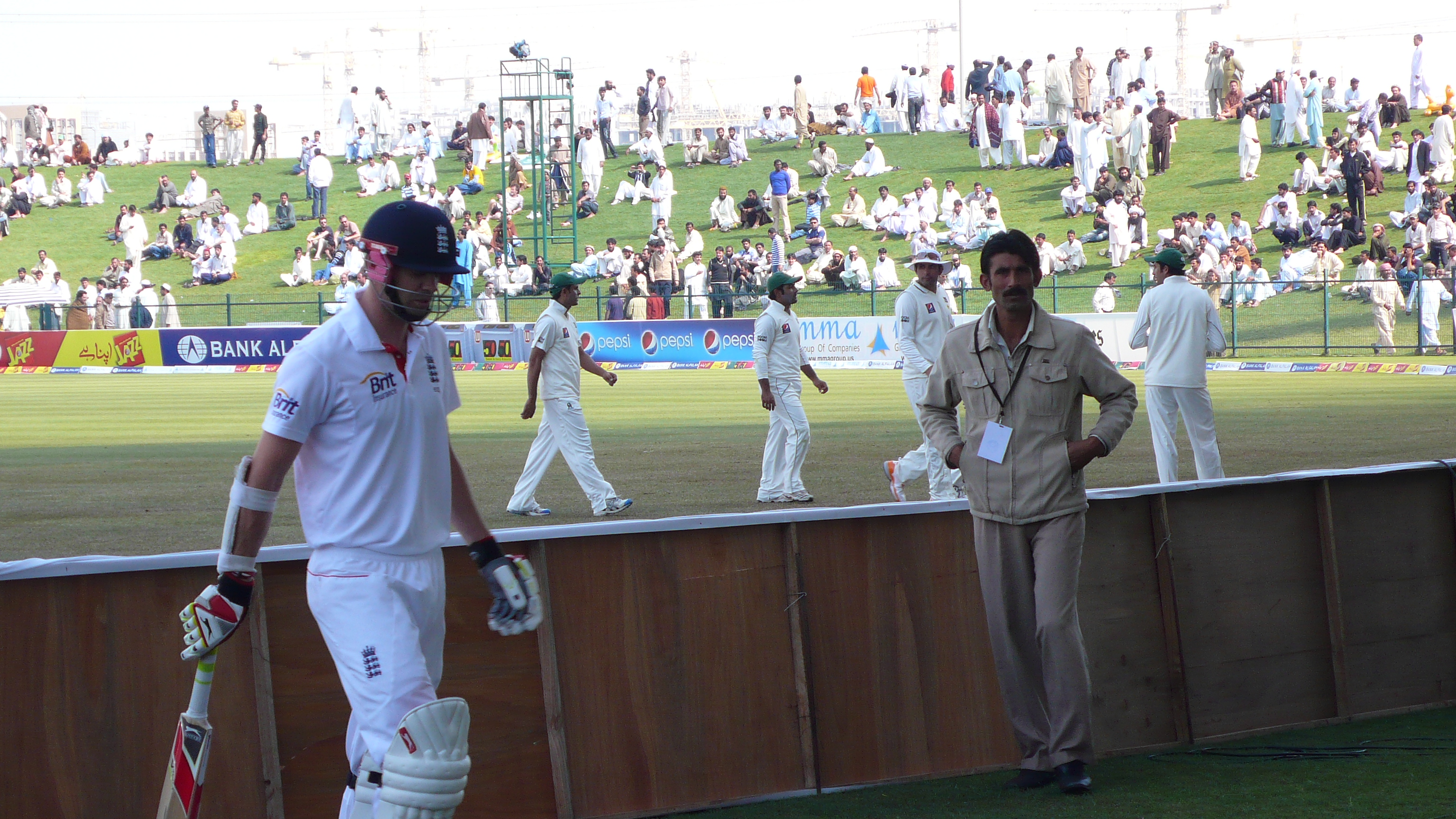
Cricket: fine legs, thick edges, stumps, slips, and creases. And wagging tails.

27 Jan

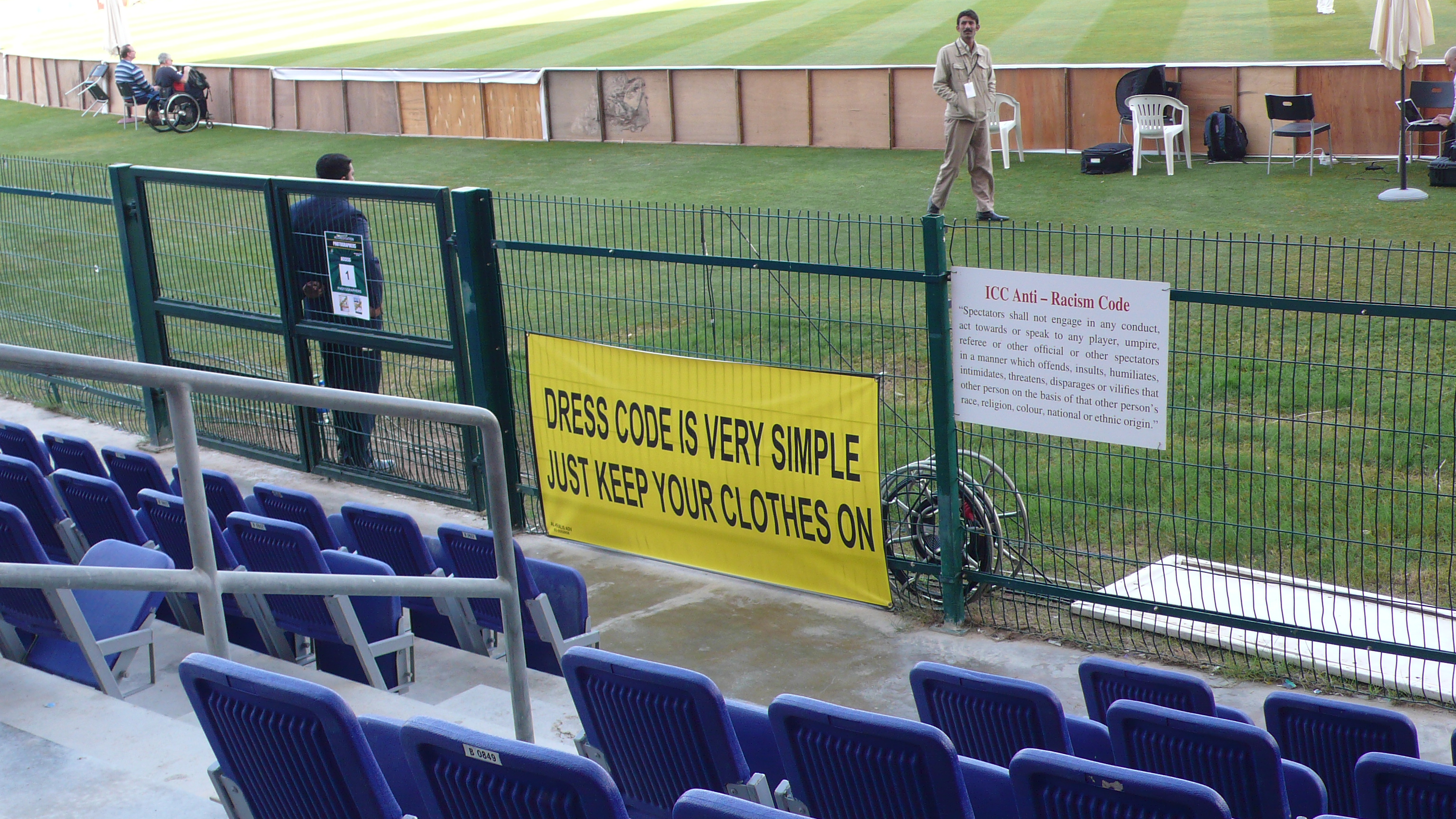
I went to an England-Pakistan cricket test match (well one day of it: it lasts five days!). I was very happy that I had just the right thing to wear…

OK, totally stupid, but it kept me going all day. And let me tell you, it was ALL DAY.

Anyway, it was very exciting because this is a test match, which means it is between two of the handful of really major national teams. A major event for cricket players. Millions watching on TV. But the stadium itself was pretty empty, because this is not Pakistan. They didn’t even charge entry and we sat right next to the pitch.

I went with a real cricket expert and I think I’ve got the terminology down now, but must say I find it pretty pervy. Leave it to the Brits.

1. The slip’s job is to catch a snick. A snick is, apparently, something the one holding the bat gets off without quite wanting to. A sweep, however, is something he fully intends to do.

2. A thick edge is a somewhat fatter snick (and also sometimes good).

3. A maiden, as you know, is what is left when you come all the way over and don’t score.

4. If the one holding the bat leaves the crease, he can really get stumped. Definitely not good!

5. Keeping a straight bat is good conservative strategy, but playing across the line–that’s very risky (and the potential rewards are great).

6. The fine leg is not too far from the wicket keeper, and very close to the first and second slip. (Yes, two slips.) No wait, that’s wrong. The wicket keeper is the one who is close to the first and second slip. As is appropriate.

7. The last part of the innings (yes, it’s plural also in the singular) is called the tail. Now, when there is a lot of scoring going on, the tail, it is said, starts wagging.


It was a desert outpost a few decades ago…

26 Jan

In the 1940s you had to go up in a plane to get this view.  Now I just take the elevator to the top of my building, nimbly sidestep the jacuzzi, and look down. They are now turning the old palace-fort into a tourist center.  This whole place is “under construction.”

Newsflash: time dilates when you travel

26 Jan

Everyone notices it. Time speeds up as you age. The last year went by so much more quickly than those years I spent in college, which were just huge, endless. I read somewhere that this happens because novelty of experience declines. We settle down, things become self-similar. Self-similarity tends to slip by quickly. Beyond actually settling down, we get lazy, having worked out our way of seeing things.

But then you travel, and the speeding is reversed for a time. I am a student again. Everything is new. I am processing new information almost at every moment. Things are uncomfortably not the way I am used to having them. And the effect is: time slows down.

I had my first, wildly disorienting experience of it yesterday. I taught a class, then came back to my apartment, then went out for a walk in the mall, where life happens here, then for a walk around the neighborhood, and dinner in an Indian vegetarian restaurant with only locals. If I had done this at home it would have counted as a leisurely day. But here everything was different. The mall was full of women in niqabs (just the eyes showing), women in niqabs *having a good time*. The restaurant was the kind where they don’t give you cutlery with your curry. You eat with your hands (or rather with your right hand) and then at the end you go to the “hand washing station.”

Anyway, later that evening I was in bed and thinking, oh no, I missed an appointment I was supposed to have had Wednesday! I was feeling quite bad about it, amazed at the toll jetlag takes. You see, I thought it was at least Thursday. And it was only after a moment that I realized, no, it’s still Tuesday! I really couldn’t believe it. How is it possible that the class I had taught had occurred *only that morning*? Adventures in time travel.

Islamic elements all over modern buildings

25 Jan

They look modern, but then look at the details. The one in the middle has little tan arched mihrabs, one stacked on the other. The left-hand one has corner balconies rising up inside a tall, narrow Islamic arch. On the right, look at that detail of the multiple blind arches at the top, there for no reason except that the architect just couldn’t resist. I imagine Western architects do this all the time, add little decorative elements like they were trimming a Christmas tree, but it seems so much clearer for me when looking at these. What are they going to do with the top of the big one rising up behind?

Persian Gulf streaming

24 Jan


A large temporary working population is an extremely old phenomenon here.  There have always been lots of Africans, Indians, Mediterraneans, and Europeans mixing on the streets here, either directly engaged in the traffic in goods passing through the Gulf, or offering services to those who are.  There is a lot of the world to see here, but I know I’m not seeing what is really on the street. The differences among people. The divisions that they see.  Today I asked someone whose job is to help me settle in if she spoke Arabic, thinking she was from the subcontinent. But she is from Sudan, of course she speaks Arabic.